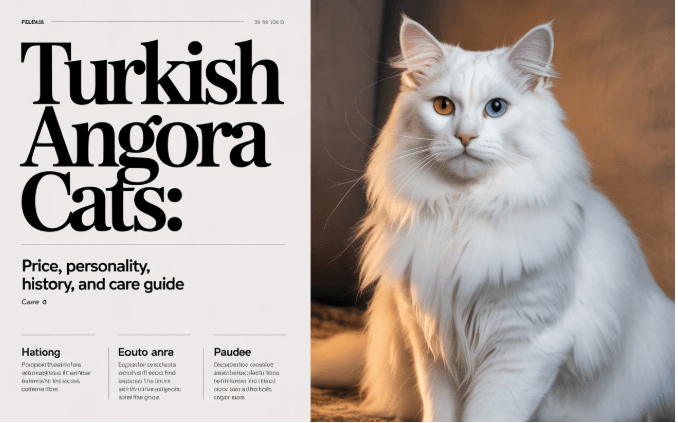
The Turkish Angora Cats is distinguished by its graceful body and gentle temperament among long-haired domestic cat breeds. In pure white or mixed colours, its soft, silky, and long coat running wild in any place. The graceful lines of this ancient breed make it a popular choice throughout the USA.
When you own a Turkish Angora cats, you own an intelligent, inquisitive friend. Their Turkish Angora cats personality is apparent in their dramatic morning zoomies or serene evening snuggles. They want you to take part in their social lives, to stimulate them mind-wise, and to offer them a warm lap.
History and Origin of the Turkish Angora Cats
Ankara Zoo Breeding
The story starts in Ankara, Turkey (home ground) where the Turkish Angora’s Cats purity was maintained by the Ankara Zoo through its Turkish Angora Cats program. The Turkish Angora Cats traces its roots to the hybridisation between the genetic ancestor of all domestic cats, the African wildcat, and local cats centuries ago. The zoo’s breeding scheme was to produce very elegant lines with silky coats and classic temperament.
This care in the past allowed Turkish Angora Cats to survive through wars and migrations and evolving times. Subsequently their charm was recognized by cat enthusiasts around the world, and they were disseminated to Europe, and then to America. Many pedigree cats can trace their lineage to those original lines.
Early European History
Back in the 16th and 17th centuries, traders and diplomats introduced the Turkish Angora Cats to Europe. The wide-eyed, soft-furred felines captivated aristocrats. European breeders, including those affiliated with the Cat Fanciers’ Association and The International Cat Association, began registering them. Their sleek style made them symbols of luxury and elegance.
When the breeding became popular in Europe, there were special emphasis on the quality of the coat, eye colour and the character of the cat. Early lines laid foundations for what we now see in registered TAs in the USA.
Cultural Background
In Turkey, the Turkish Angora Cats was culturally significant beyond that of just a household pet. They were featured in art and folklore and graced the homes of kings and queens as an emblem of grace and good luck — a tradition they can still take pride in. Refined and noble, their reputation as an elegant cat still rings true today.
Take for example many owners of Turkish Angoras Cats today who often say that having a Turkish Angora Cats is like owning a piece of that tradition. They are not just pets – they connect you to centuries of history, lineage and Celestial pride, if not culture.
Physical Appearance & Characteristics
Body Structure, Size, and Build
A Turkish Angora’s body is slender, graceful, well-muscled, and athletic. They are mid-sized cats with delicate bones, long legs and a well balanced body that enables them to move with exceptional grace and agility. They may appear fragile, but these small cats are muscle-packed, powerful jumpers, and excellent climbers. Active and inquisitive by nature, their stance is frequently standing upright and vigilant.
Skin Tone and Complexion
The body and legs of a Turkish Angora are slender and thin-boned and the skin underneath its soft coat is silky and pliable. Skin color usually matches the coat color and is healthy and uniformly pigmented. Since their coat is single-layered without undercoat, their skin is more exposed and needs to be clean and well taken care of. Good regular grooming also ensures good skin condition and avoids drying out or irritating the skin.
Eye Shape, Color, and Expressions
Turkish Angoras also have large almond shaped eyes that are slightly slanted, making its expression striking and giving it an intelligent look. Eye colors can be blue, green, amber or odd-eyed, with each eye a different color. Their eyes are one of their most mesmerizing features and usually they look playfull, loving and nosy just like they are.
Head Shape, Ears, and Facial Features
The Turkish Angora’s head is on the small to medium side and has a smooth, wedge-shaped appearance. They have large, pointed ears that sit high on the head which contribute to their alert and graceful appearance. The face is fine and well defined with a gently tapered muzzle and a graceful profile which further enhances their refined appearance.
Tail Length and Overall Elegance
Angoras have a long, thin tail that is often plumed with soft, flowing hair. Their tail is normally carried high or perked up, either with a gentle curve or straight. Along with their silky coat and graceful movements, the tail is very important for their regal and refined look.
Distinctive Traits That Set Turkish Angora Cats Apart
What differentiates Turkish Angora cats from others is their soft, fine single coat, bright eyes and charming playful personality. They are smart, social, and form close bonds with their owners. Their affection for interaction and their elegant physical features make them a one of a kind and much desired cat breed.
Personality and Temperament of the Turkish Angora Cats
Intelligence
Turkish Angoras Cats are very smart and vigilant. They learn routines quickly and like to play with puzzles or interactive toys that make them think. A clever breed, they frequently recall favorite hiding spots or learn daily routines in their home. Their brains are so shCaring for Turkish Angora Cats is really just catering to mean needs, day in and day out.Feed the cats good quality food at appropriate intervals, change the water regularly and make sure the litter tray is clean. Watch for changes in behavior:a decrease in appetite, lethargy or anything else that seems out of the ordinary could be indicative of illness.Nothing more than regular simple daily care can begin to create trust and ensure well being. arp, training them can be fun and rewarding.
Playfulness
These cats pack plenty of energy. Many owners report their Turkish Angora Cats racing around at dawn or pursing shadows in the twilight. They are a playful breed, lively and constant. Without sufficient activity, a few might turn to mischief — they scratch furniture or crawl into cupboards. Proper Turkish Angora Cats exercise needs can be met with interactive toys, climbing posts, or even safe outdoor access.
Social Nature
Turkish Angoras Cats often bond deeply with humans so, they bond deeply. They want attention and, as crabs for space in tanks do, they can follow you from room to room. Their love-bug side expresses itself in the form of gentle head bonks or curling up next to you on the couch. They like company, so they make good house cats for houses with people are often at home. Cat socialization helps them thrive.
Compatibility with Families & Pets
They make great family cats, are good with older children and can live with other pets (although introductions need to be slow and gentle). Their calm yet inquisitive personality allows them to adapt well, as long as they receive love and stability. They like to play with people, but also have quiet nooks for a nap.
Caring for a Turkish Angora Cats (Complete Guide)
Daily Care Needs
Caring for Turkish Angora Cats is essentially meeting the day-to-day requirements. Provide high quality food on a schedule, keep water clean and the litter box fresh. Monitor changes in behavior: refusal to eat, lethargy or unreal behavior may be signs of sickness. Simple everyday care builds trust and a sense of the well-being.
Exercise & Mental Stimulation
Turkish Angoras Cats are content when occupied. They excel with climbing posts, puzzle toys and supervised indoor adventures. Rotating toys keeps them interested. Just a couple of minutes of interactive play a day does wonders. Exercise promotes a healthy weight and maintains its lithe form.
Creating a Healthy Home Environment
Supply perches, soft resting places, and secure vertical locations. Don’t allow them to wander outside unattended — a lot of them make great indoor cats in U.S. A pride-loving, gentle, well-handled with routine veterinary care in a loving home is what enables them to bloom in comfort and security.
Grooming Guide for Turkish Angoras Cats
Coat Care
Their silky coat needs to be brushed gently two or three times a week. That simple routine keeps tangles at bay, reduces shedding, and maintains a shiny coat. In addition, gentle shampooing and rinsing are beneficial for the skin and coat while hair is being shed.
Eye, Ear & Skin Care
Inspect eyes and ears frequently for signs of discharge or accumulation of wax. If necessary, clean with care using solutions approved by vets. Look for any dry patches or irritations on the skin. Good ears, bright eyes and silky fur all help make a cat comfortable, healthy and happy.
Shedding Management
Increase the number of grooming sessions and vacuum the hair of the surfaces during seasonal moulting. A soft brush can also be used to gather loose fur before it becomes airborne. It makes your home more neat and clean, and keeps your cat’s coat beautiful while protecting your furniture.
Diet & Nutrition for Turkish Angora Cats
What to Feed
Feature high protein cat food designed for active cats. In the United States, the majority of pet owners select a AAFCO approved cat food that has meat or fish as the first ingredient. Some blend wet and dry food and include an occasional treat for excitement. Healthy fats, vitamins and hydration contribute to shiny coats, strong muscles and playful behavior.
How Much to Feed
Serving size is affected by age, activity level and health. Calciferous Angoras Higher energy needs for young, very active, or hunting Angoras in the field. Senior or indoor cats should receive moderate portions to prevent gaining unwanted weight. Avoid obese — monitor body condition and a lean healthy body matches their agility.
Nutritional Tips for a Healthy Cat
Omega‑3 fatty acids for skin & coat and joint health. Taurine is vital for heart function and vision. Keep water fresh. Stay away from foods with fillers and too many grains. Proper nutrition contributes to a long, healthy life for your Cats – Turkish Angora.
Common Health Issues in Turkish Angora Cats
Hereditary Deafness
White Turkish Angora Cats or odd-eyed cats are susceptible to deafness among white cats due to their genetics. A BAER test (test for deafness) also allows for early detection of hearing problems. Owners can compensate, by using visual signals rather than sound, and providing a safe, enriched environment.
Heart Problems (HCM)
Some Angoras are prone to Hypertrophic cardiomyopathy (HCM) in cats which is a heart muscle disease. A vet can test with echocardiograms. Time is on your side to manage the disease if catch it early. Maintain the Regular Veterinary Checkups for Long-Term Wellness of Your cats.
Other Health Considerations
Dental health, joint health, and weight are important, as well. Longhair breeds may be subject to risks of hairballs if grooming is overlooked. Consistent veterinary examinations and preventative treatments contribute to your cat leading a healthy and contented existence.
Behavior, Training & Fun Activities
Training Tips
Turkish Angora Cats do respond to positive training. With treats, with praise, and with patience. Training them to do some simple tricks like “sit” and “come” can also increase trust between you and give them some mental exercise. A predictable routine helps them learn.
Behavior Patterns
Curiosity, energy and emotion should be expected.When they poke out their nooks, look into windows and react to noises. Even in these situations, their social nature shines through when they greet you or demand your attention. Knowing about their cat behaviour and temperament helps you to bond well.
Games & Activities They Love
They like to climb, chase feather toys, play with puzzle feeders, or use cat climbing structures. These activities fulfill their natural desires to explore and hunt. Comfort Diva cat toys or any similar interactive toys are just perfect to make them happy and keep them entertained.
Turkish Angora Cats Price Guide & Buying Tips
Average Price Range
In the USA, a purebred Turkish Angora Cats Sats typically costs $600-$2,000. The price is subject to variation depending on coat color, eye color, lineage, and breeder reputation.
Factors Affecting Price
Price is influenced by factors such as the presence of a rare coat color or odd-colored eyes, having pedigree paperwork from CFA or TICA registered Turkish Angora cats with breeder standards. Cats of show quality are generally more expensive.
Adoption vs. Buying
Adoption provides a caring alternative at a fraction of the cost and for cats that are less popular. When purchasing from reputable breeders, you can be assured that the cats are pedigree, have been health screened, and are predictable in temperament. For both of these reasons, if you are considering Turkish Angora Cats adoption or purchase, make a responsible choice for cat welfare.
Turkish Angora Cats in Art, Culture & Modern Media
Historical Depictions & Cultural Significance
Turkish Angora Cats can be found depicted in ancient Turkish paintings and textiles arts. Their beauty and elegance represented grace, luck and high born family. That cultural importance of the Turkish Angora Cats still exists now and it is so loved among the cat lovers all around the world.
Modern Presence
Today these cats once again appear in photography, social media, cat shows, and design motifs. Their striking looks and placid temperament make them the perfect model for artists or pet influencers. And the excitement just keeps increasing for this unique cat breed throughout the USA and beyond.
Best Toys for Turkish Angora Cats (Including Comfort Diva Picks)
Interactive and Mental Stimulation Toys
Feather wand toys, puzzle feeders, and laser toys stimulate their hunting instincts and keep your cat mentally and physically active. These toys allow them to focus their inquisitiveness and energy into productive and entertaining activities.
Climbing and Comfort Toys
Cat trees, ledges, and snug beds encourage climbing and offer places to rest. Paired with soft, plush pillows or scratching pads, they create a warm, stimulating environment for a contented, calm kitty.
A simple table shows toy types and purpose:
Toy Type Purpose
Wand / Feather toy Simulates, hunting, exercise
Puzzle feeder Mental challenge, slow eating
Cat tree or shelves Climbing, agility
Soft bed or hideout Comfort and rest
Are Turkish Angoras Cats Good Pets? Pros & Cons
Benefits
Turkish Angora Cats add grace, love and spirited company to your living space. Their intelligence and warm social nature make them excellent pets for families and individuals. Their silky fur and dazzling eyes makes them beautiful and unique in the world of long haired cat breeds.
Challenges
They require a lot of attention, brain stimulation and grooming. They can become bored or stressed if not cared for properly. Exercise, health screening and grooming are essential. Not if you’ve got little time to hang out with pets.
Suitability for Different Families
Best for busy families, work-from-home singles, or seasoned cat parents. If you provide the interaction, love and care — A Turkish Angora Cats belongs perfectly. Their elegance and temperament make them well worth the effort.
FAQs
Q1: What is a Turkish Angora’s Cats personality?
A: Turkish Angoras Cats are playful, intelligent, social and affectionate cats, that frequently form strong bonds with their owners.
Q2: Are Turkish Angora cats high maintenance?
A: They are moderate to high maintenance as they require regular grooming, mental exercise and physical exercise, unlike short-haired cats.
Q3: Are Turkish Angoras Cats loud?
A: They usually have a soft voice but are able to be loud when they want to be to get attention or are curious.
Q4: What are the needs of a Turkish Angora cat?
A: Provide all the above, plus a balanced diet, daily play and exercise, grooming, safe climbing structures and regular visits to the vet.
Q5: Do Turkish Angoras Cats like kids?
A: Yes, they generally are good with children when properly socialized and introduced slowly.